Short side
Face close to the edge, space behind. Trapped, regretful, unaware of what is behind.
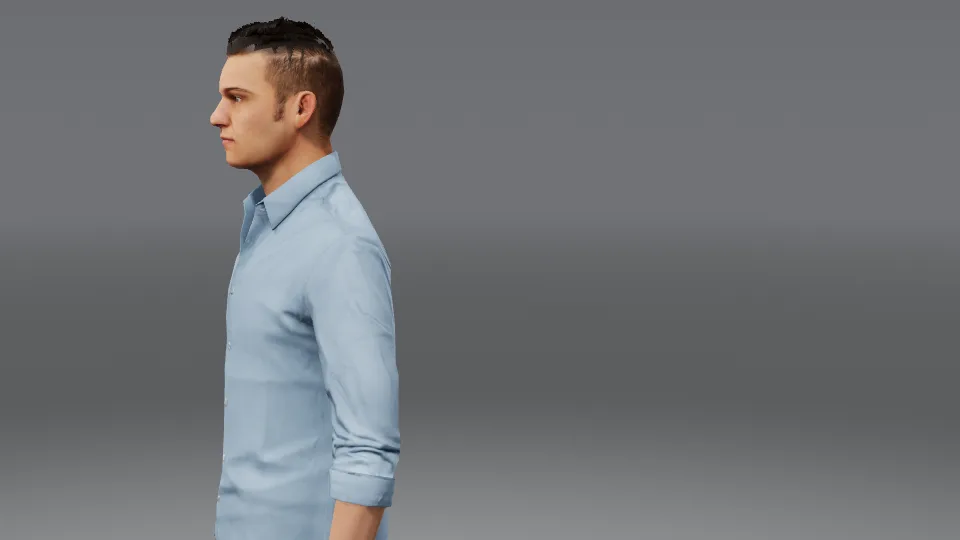
- Height
- 1.6 m
- Distance
- 2.35 m
- Tilt
- 5° down
- Lens
- 50 mm
- Size
- Medium shot
What it does
A face close to the edge it looks toward leaves most of the frame behind the head. This reverses normal lead room, so the gaze leaves the picture almost at once. Whatever is behind the person takes up the open part. Short-siding is commonly used to suggest tension, isolation or unease.
When to use it
Works for a spy on a park bench, a husband signing divorce papers, or a night clerk in an empty shop. It is also used in arguments, with each person framed against the edge they face.
Writing the prompt
Fill the part behind the head: "short-sided framing, subject near the left edge and facing left, dark doorway behind". State the edge and the gaze, and do not mention "lead room".
Easily mixed up with
Short side
Face close to the edge, space behind.
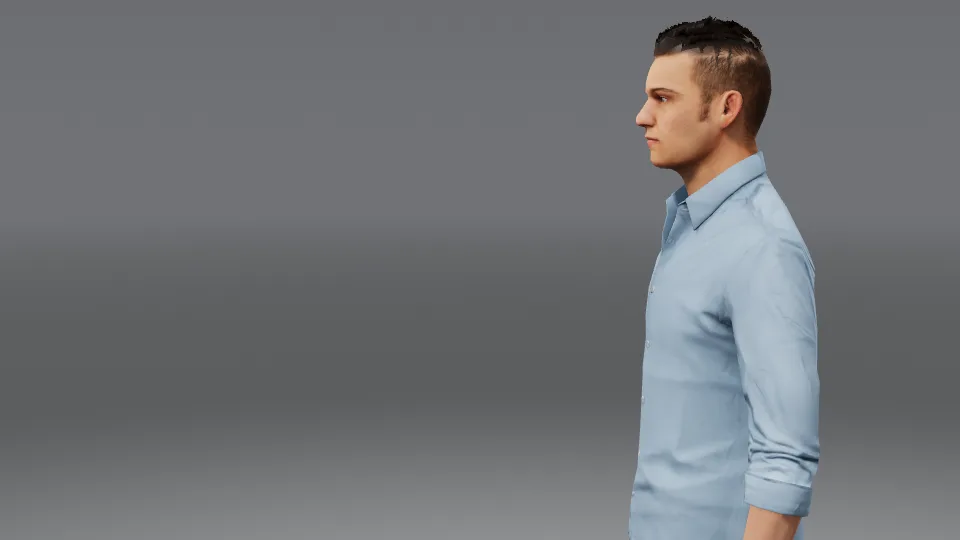
Lead room
Opens the frame on the side the eyes look to.
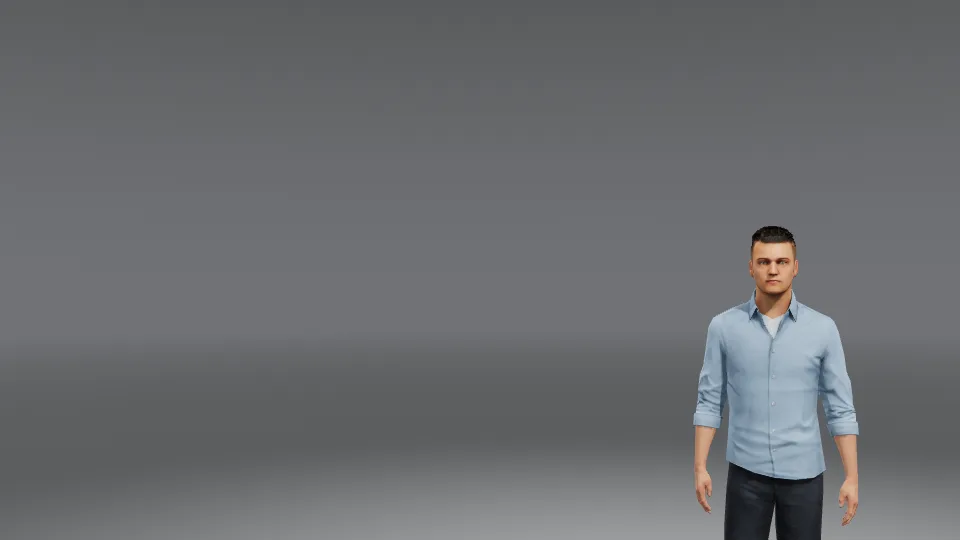
Corner frame
Pushes the figure down as well as sideways, whatever the gaze.