Dutch over the shoulder
Over the shoulder with a tipped horizon. Threats, interrogations.
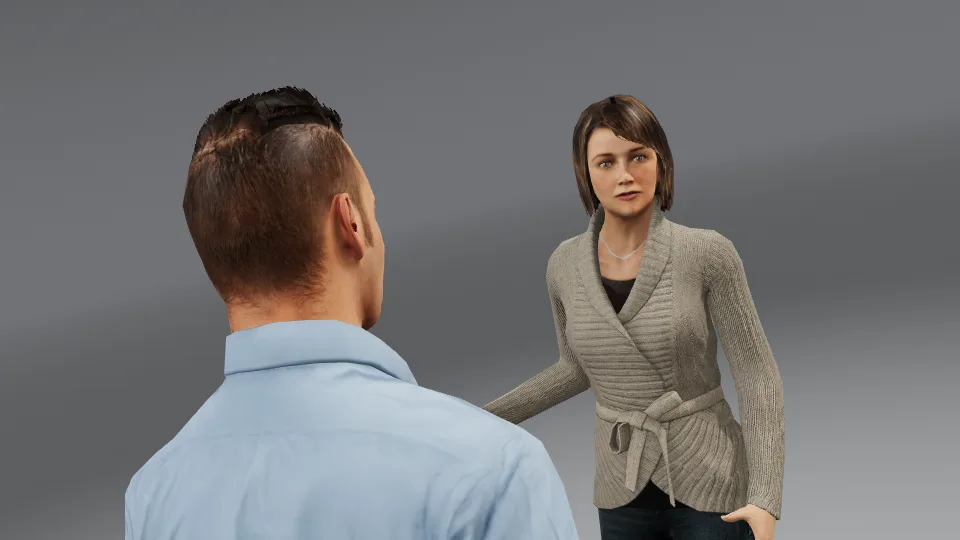
- Height
- 1.7 m
- Distance
- 1.9 m
- Tilt
- 7° down
- Lens
- 35 mm
- Roll
- 13°
- Size
- Medium shot
What it does
Take a normal over-the-shoulder shot and roll the camera to one side. The near shoulder becomes a slope, both heads lean, and door frames and other upright lines cross the picture at a slant. A Dutch angle is often used for unease, so this version is found in scenes of threat or distrust.
When to use it
Tip the frame as a hostage spots the exit, a fortune teller turns the last card or a colleague slides over a secret file. Spy and police stories often use it when one person presses another for an answer.
Writing the prompt
Include upright things such as "door frame, hanging lamp" so the tilt shows, and write "Dutch-angle over-the-shoulder shot, horizon tilted 15 degrees". Never add "level horizon" or "symmetrical".
Easily mixed up with
Dutch over the shoulder
Over the shoulder with a tipped horizon.
Dutch angle
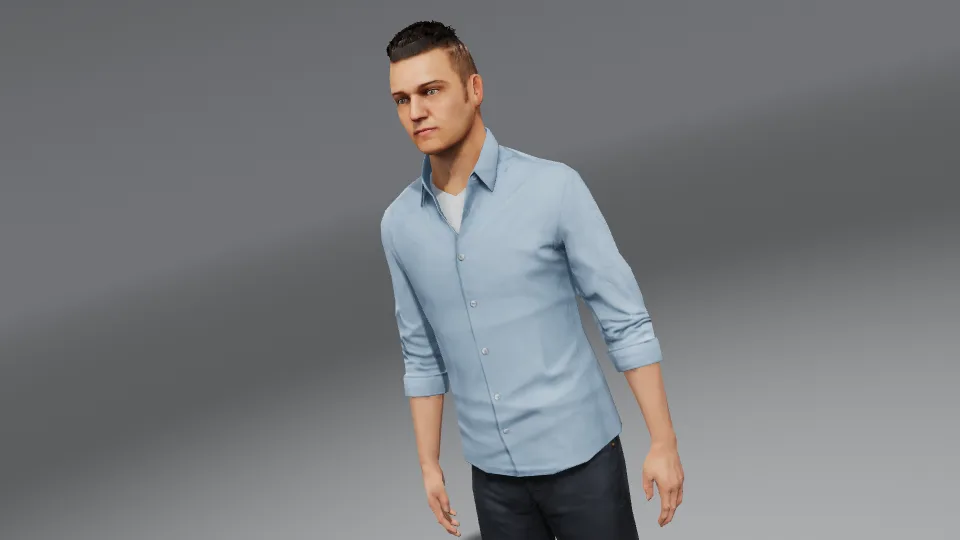
Tilts any kind of shot and needs no second person.
Dutch two shot
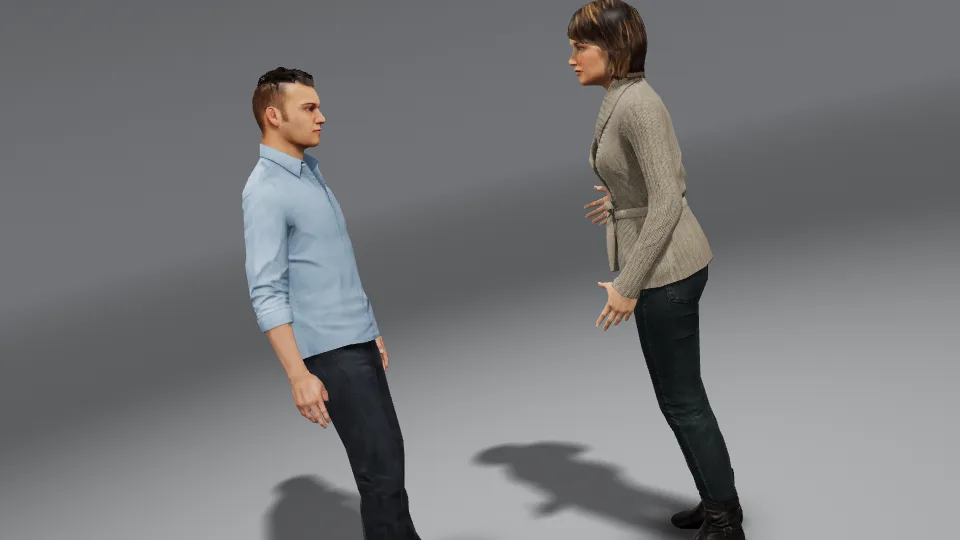
Shows both people facing each other equally under the same tilt.